
Owerri, Nigeria. August 3, 2026
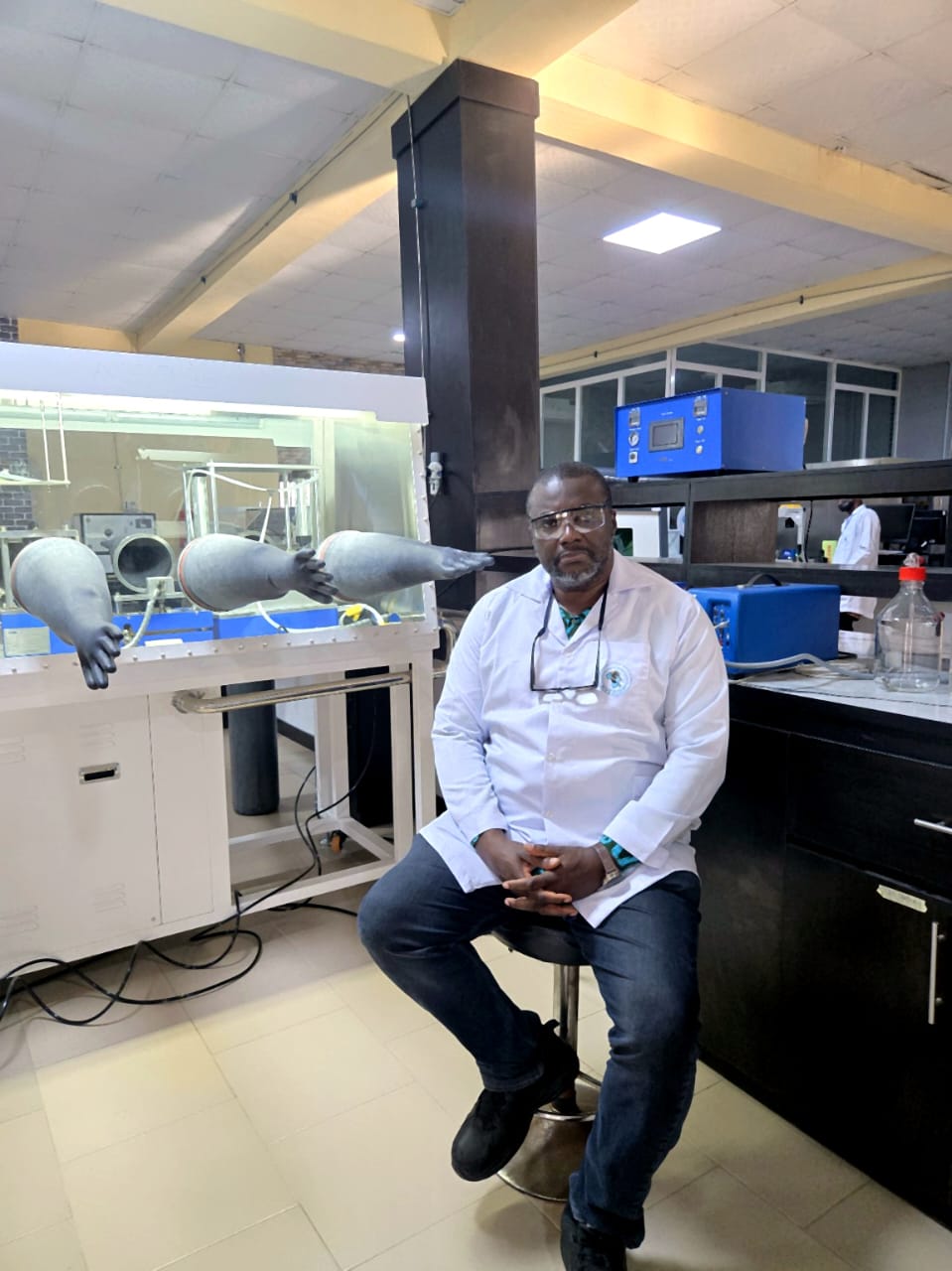
Between 2021 and 2026, FUTO’s external research income grew by more than 2,000 per cent, its publication output climbed sharply, and the University entered the Times Higher Education World University Rankings for the first time, placing 14th in Nigeria in 2024 and rising to joint 11th today. On his final day in office, Professor Oguzie reflects on how that happened, and argues that the next phase of Nigerian university research must be measured by a different yardstick altogether.
*You complete two terms as Deputy Vice-Chancellor today. How does it feel?*
Grateful, and fulfilled. It was a demanding period of service, but a rewarding one. Completing the two terms permitted under University regulations gives me real satisfaction; not because of the office, but because of what the University community achieved in research, innovation and institutional confidence during those years.
In practice I spent five years in the office. My first term ran from 2021 to 2023 and my second from 2024 to 2026, with a year in between during which I continued to run the portfolio. The work did not pause, and neither did the momentum.
I am grateful to have served, and grateful to the colleagues, staff, students, research teams and partners who carried the work with me.
*What do you consider the defining achievement of the tenure?*
The creation and energization of the FUTO Research Enterprise.
The seed was sown earlier, during my tenure as Director of the Centre for Research and International Development, CRID, when we began strengthening research coordination, grant awareness, international engagement and institutional support for researchers. Those efforts blossomed in the Research, Development and Innovation portfolio. We widened participation, built enabling systems, and deliberately cultivated a culture of research excellence, collaboration, grant competitiveness and scholarly productivity across the University.
Some of the results are measurable. Publication output by FUTO staff and students rose significantly, particularly in Scopus-indexed journals. That strengthened the University’s research profile and contributed to FUTO entering the Times Higher Education World University Rankings for the first time in 2024, at 14th in Nigeria. The University now stands at joint 11th. Over the same period, external research income grew by more than 2,000 per cent, which is evidence that our researchers can compete successfully for major national and international funding.
But the achievement I value most does not appear on any dashboard. Our people began to believe in their own capabilities. Staff and students came to understand that they could develop competitive ideas, build strong partnerships, attract serious funding and produce work of global relevance. Confidence, once established, compounds.
*What made that progress possible?*
It was a collective achievement, and it should be described as one. It rested on the commitment of researchers, students, research administrators, centre leaders, University management, and our national and international partners
Our responsibility was narrower: to provide leadership, establish enabling systems, create opportunities, and encourage the University community to step forward.
I am profoundly grateful to the 8th substantive Vice-Chancellor of FUTO, Professor Mrs Nnenna Oti, and to the Governing Council and Senate, for the opportunity to serve and for their support of the Research, Development and Innovation portfolio. I also sincerely thank the 9th substantive Vice-Chancellor, Professor I. N. S. Dozie, for his cooperation and support as I completed my tenure under his administration.
*You have proposed “Research 7.x” as the direction for the years ahead. What is it?*
Research 7.x describes a transition; from research aimed mainly at publication and academic recognition, to research deliberately designed to produce measurable economic, technological, industrial and societal value.
It does not diminish excellent scholarship. It extends the research lifecycle beyond publication. It asks us to identify strategic problems, assemble multidisciplinary teams, involve industry, government and communities from the outset, develop and validate technologies, protect intellectual property, support commercialization and deployment, and then systematically measure impact.
The premise is simple: universities must do more than generate knowledge. They must develop talent, technologies, enterprises, policies and practical solutions that answer national and continental priorities.
*What does that mean in practice, for ACE-FUELS, and for FUTO?*
For ACE-FUELS, it is the framework for translating our capabilities in solar energy, batteries, hydrogen, corrosion, nanotechnology and electrochemical systems into deployable technologies, industrial services, skilled professionals, start-ups and evidence for policy. Our major international projects should function not merely as research grants, but as platforms for building sustainable technology and innovation ecosystems.
For FUTO, it is a pathway for consolidating the Research Enterprise we have established, and moving from increased research output to increased research value. The University should progressively assess its portfolio not only by publications and grants secured, but by technologies developed, problems solved, intellectual property generated, enterprises created, policies influenced, jobs supported and improvements delivered to society.
Research 7.x is both a vision and an implementation framework. My hope is that ACE-FUELS can serve as the institutional pilot and demonstration platform for its wider adoption across FUTO and, in time, across other Nigerian universities.
*What does leaving the DVC office mean for ACE-FUELS?*
It allows me to devote far greater attention to the Centre and to lead it into its next phase.
We have built a strong foundation – in advanced research, postgraduate education, international collaboration, laboratory infrastructure, capacity development and technology innovation. The task now is to convert those assets into scientific, technological, industrial and societal impact.
*What are your immediate priorities?*
Delivering our major international projects. Strengthening our research platforms in next-generation solar technologies, batteries, hydrogen, corrosion and electrochemical systems. Expanding postgraduate and professional training.
Alongside that, we will deepen industry engagement, grow our laboratory and technical services, accelerate innovation and commercialization, and strengthen the long-term institutional and financial sustainability of the Centre.
*And the long-term vision?*
For ACE-FUELS to become a globally respected African centre for future-energy research, technology development and human-capacity building.
We want the Centre to contribute practical solutions to Africa’s energy challenges while developing the researchers, innovators, technologists and entrepreneurs who will lead the continent’s energy transition. ACE-FUELS must serve as a bridge between research and deployment; connecting universities, industry, government, communities and international partners around solutions that deliver measurable impact.
*What is your message to the present University administration and the wider FUTO community?*
I sincerely wish the present administration even greater success than we achieved. Institutional progress must be continuous, and every administration should build on the foundations laid before it. I remain committed to supporting the University’s research and innovation aspirations, and to contributing in every way I can to moving FUTO to greater heights.
*And to your colleagues, partners and the ACE-FUELS community?*
I am deeply grateful for their support, commitment and confidence. Everything achieved so far has been the result of collective effort.
As we begin this new chapter, I invite our researchers, students, alumni, industry stakeholders, development institutions and international partners to work with us in building practical solutions that deliver lasting impact for Nigeria, Africa and the wider world.
The foundation has been laid. The next phase is to scale it.